
Banking transformation
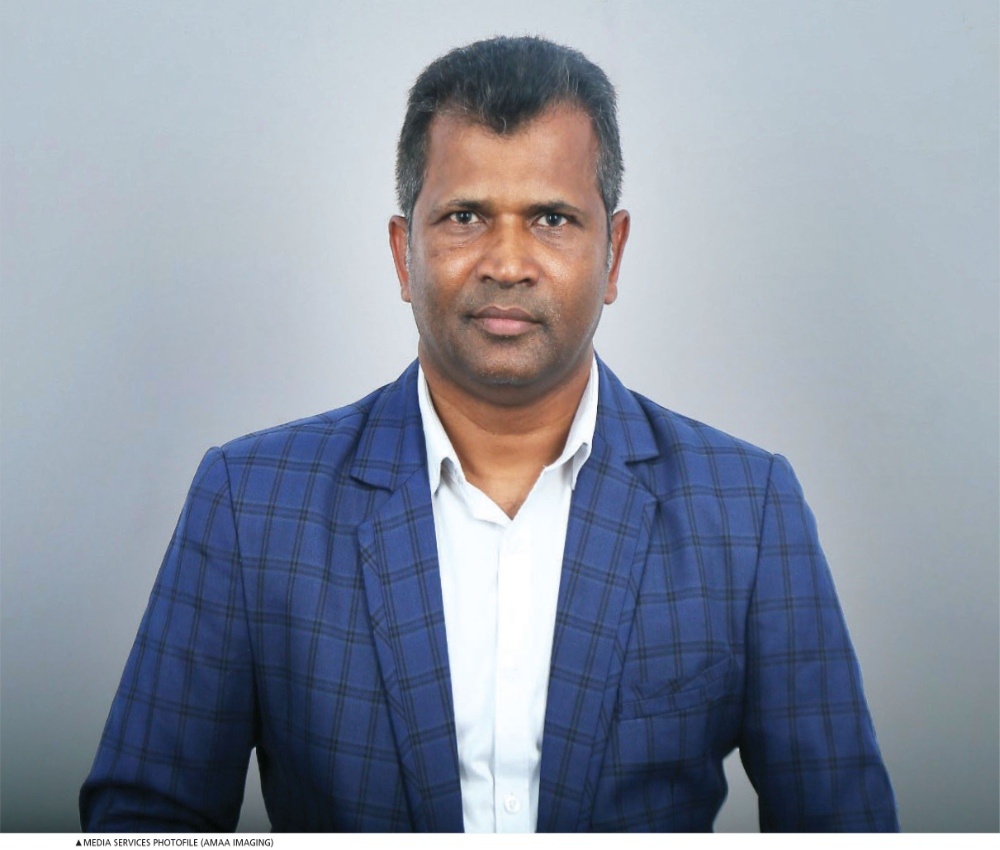
Q: What motivated your move from Sri Lanka to Canada – and how has it shaped your professional outlook?
A: A career built across borders was intentional. After over 23 years in Sri Lanka’s banking and financial sector, I sought a new dimension to my experience. I moved to Canada in 2023 to gain exposure to a highly developed, technology driven and integrated financial system.
Canada offered sophistication – from advanced fintech integration to structured risk frameworks and customer centric digital ecosystems. the experience reshaped my thinking from operational excellence to strategic agility.
This journey has reinforced my adaptability, continuous learning and global perspective while also reaffirming that the core of banking remains unchanged: trust, relationships and value creation.
Today, I see my experience as one integrated journey – i.e. combining emerging market resilience with developed market precision.
Q: Having worked in both Sri Lankan and international corporate environments, what are the most striking differences in workplace culture and management styles?
A: The contrast is both subtle and significant. Sri Lankan workplaces are largely relationship driven with visible hierarchies, centralised decision making and leadership that blends authority with mentorship.
There is also a strong sense of loyalty and adaptability in navigating constraints and market challenges.
International corporate environments such as in Canada are highly structured and process driven, with a greater emphasis on transparency, accountability and systems. Decision making is decentralised with empowerment at different levels and a clear focus on performance metrics.
Another striking difference is in communications. Sri Lankan workplaces tend to be more indirect and relationship sensitive, while international environments encourage openness, clarity and constructive dialogue.
The work-life balance is more defined internationally, supported by policies and culture whereas in Sri Lanka, flexibility comes through personal commitment rather than formal structures.
Ultimately, both systems have their strengths – Sri Lanka builds resilience and strong connections, while international environments drive efficiency, innovation and scalability.
Q: What strengths does Sri Lanka’s corporate sector possess that are often underestimated, in your opinion?
A: Sri Lanka’s corporate strength lies in its people – a factor often underestimated globally. Professionals bring exceptional talent, particularly in sectors such as banking and finance, with the strength of knowledge, practical exposure and the ability to operate across multiple functions.
What truly stands out is their commitment: dedication, ownership and a willingness to go beyond defined roles, often under-challenging conditions.
There is also an undeniable culture of teamwork, which is supported by strong interpersonal relationships and a collective mindset.
In many ways, Sri Lankan professionals combine technical capability with resilience and adaptability – qualities that are increasingly valuable in today’s dynamic business environment.
Q: Conversely, what are the gaps that Sri Lankan organisations need to address to compete internationally?
A: To compete globally, Sri Lankan organisations must accelerate tech adoption, improve efficiency and productivity, and consistently meet international quality standards.
A greater focus on innovation, data driven decision making and digital transformation is essential, alongside enhancing corporate governance, process standardisation and scalability.
Developing global mindsets, retaining talent and aligning with international best practices will also position organisations for sustainable competitiveness.
Q: How has the role of banks evolved in supporting economic resilience – especially in emerging markets such as Sri Lanka?
A: Banks have evolved from resorting to traditional lending to becoming key drivers of economic resilience.
In emerging markets, they play a critical role in supporting SMEs – the backbone of the economy – through access to finance, advisory support and risk management. This helps businesses sustain operations, drive growth and navigate economic uncertainty.
Q: What lessons can Sri Lanka’s banking sector learn from more mature financial systems such as Canada’s?
A: Sri Lanka’s banking sector can learn the value of deep fintech integration across every aspect of banking.
Mature systems such as those in Canada demonstrate how digital platforms – supported by real-time monitoring, data analytics and strong cybersecurity frameworks – can enhance efficiency, customer experience and risk management.
Embracing innovation while maintaining trust and regulatory discipline will be essential for future ready banking.
Q: And finally, how do you view Sri Lanka’s economic future in the context of global shifts and challenges?
A: Sri Lanka’s economic future will depend on resilience and reform. Despite recent challenges, the country has strong human capital and entrepreneurial potential.
A greater focus on export diversification, digital transformation, policy stability, governance, foreign investment and SME empowerment will be key to achieving sustainable and inclusive growth.
