
I DIDN’T SIGN UP FOR THIS
Monita Pesumal chronicles living between sirens, sleepless nights and little windows of joy

We come to the Gulf for opportunity, stability and a better life. We build routines. We create homes far away from home. And when that everyday life is interrupted, it shakes you to your core. I didn’t sign up for this. None of us did.
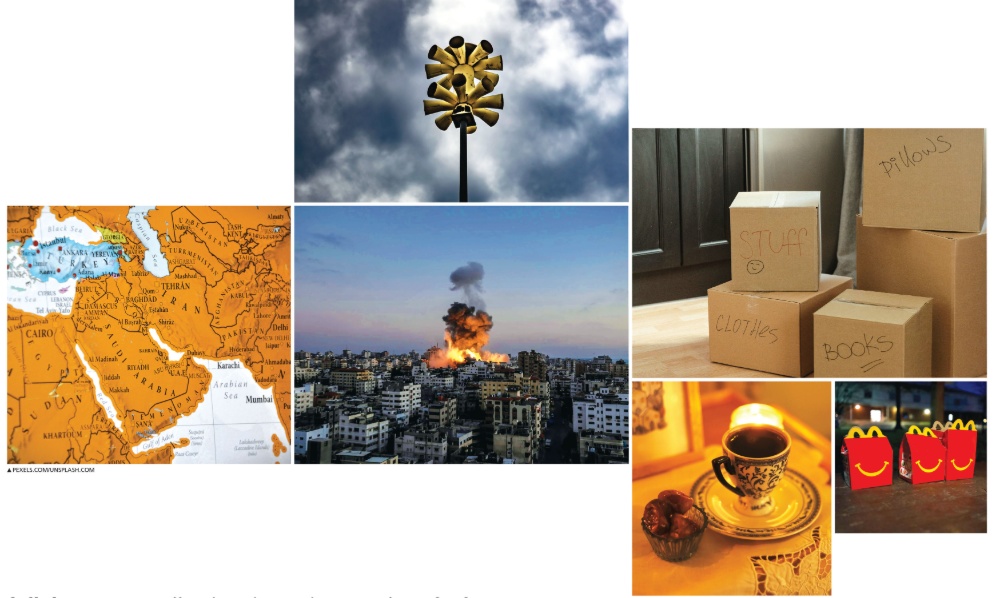
At 11 a.m. on 28 February, I witnessed the first explosion. I saw a thick cloud of black smoke billowing in the distance. It was only later that international media confirmed what we had witnessed.
I jumped out of my skin as rockets kept hitting the city. Every time I heard a bang, I ran to the corridor. I’m not a fast runner – I’ve been told I run like a frog – but fear will move you faster than anything else.
By 10 p.m., exhausted, I made my way down to reception. Almost everyone had vacated the building except for a lovely Thai lady and two young Moroccan women. We had never met before but suddenly there we were, discussing the situation over dates, Turkish tea and cookies. That night, we crouched under a staircase and tried to sleep while news of drones hitting residential towers nearby haunted our thoughts.
The next day, we moved into the basement.
With the help of housekeeping, we organised a sofa, pillows and mattresses. We were glued to our phones, panicking every time the siren went off. The day passed in an emotional frenzy of tears, screams and silence. We broke fast with McDonald’s – a Happy Meal was the only comfort we could find that day.
On day three, the sirens paused long enough for us to run upstairs, shower and pack emergency bags. We kept our passports on us at all times, which was enough to heighten my anxiety. The building management wanted us to move to a safer location but we didn’t want to leave the comfort of our own homes.
In the afternoon, I painted my toenails to distract myself. We had no appetite but managed to share some za’atar, olive oil and bread. The security guards woke us up each time there was an attack. “Madam, drone coming,” they would say with bright smiles, trying to help. I know they meant well but my nervous system did not appreciate it.
By day four, we moved into a vacant flat on a lower floor. That’s when something shifted. Four women from three different corners of the world, thrown together by circumstance, started to build a rhythm. We shared food, updates, snacks, gossip and fear. Maybe it was the rain that afternoon or maybe it was sheer exhaustion but that night we managed three solid hours of sleep. It felt like a luxury holiday.
On day five, after two hours of nonstop bombardment, I was in tears. By evening, the attacks had subsided and we pretended every loud bang was thunder. We did some art journaling and colouring to pass the time. We shared shawarma, fries and sambusas, then ordered midnight Ramadan treats – kunafa and mint tea. And that’s when, for the first time in five days, I laughed.
The next evening was couscous night. Ordinarily, we love Thursdays because they signal the start of the weekend. But that day began at 4 a.m. with thuds and booms. I will never take the sound of birds chirping for granted again.
By 9 a.m., I had made it up to my flat to shower and work but anxiety had taken over. By 3 p.m., I reheated my coffee multiple times and still couldn’t drink it. At 5 p.m., I made pasta and garlic bread for the girls but a few bites were all we could manage.
A week in, we found the courage to venture to a nearby supermarket. And there, for one blissful hour, I felt a sense of normalcy return. The shops were open, the aisles were stocked and people were grocery shopping – not panic buying, simply shopping. That one hour carried me through the rest of the day.
The days that followed were strange in their sameness. There were sirens at random intervals and screams during work calls whenever an interception startled me. We ate South Indian food for lunch and dinner with the complimentary jalebi lifting our blood sugar, if not our spirits. Karak chai with rose essence became a small comfort on rainy afternoons.
There were art supplies in the basement and, for the first time since this nightmare began, music playing softly in the background. Every so often, life would crack open enough to let in a little window of joy.
On Women’s Day, we stepped out for coffee because being cooped up was taking a toll on our mental health. The square was beautiful but eerily quiet. Still, it gave us a sliver of hope. We returned just in time because that night was relentless. Every hour, on the hour. The cement floor hurt our backs and we didn’t sleep a wink until the all-clear sounded at 7.30 a.m.
By mid March, I packed my life into boxes and mismatched suitcases and left the apartment I had loved for seven years to move to a safer neighbourhood. The movers didn’t charge me a penny. “It’s the least we could do,” they said. This is the thing about life in the Gulf that we expats know well: in the hardest moments, kindness appears quietly and without ceremony.
A month in, I realised that what I missed most was peace – the ability to laugh freely, breathe without fear, drink coffee while it was still hot, go to sleep in my own bed and trust that the night would be uneventful.
But somewhere between the sirens and the sleeplessness, the shawarma and the shared tea, the tears and the tiny jokes, I learned that resilience does not always look heroic. Sometimes it looks like showing up to the basement with your passports, chargers, blankets and art supplies. Sometimes it looks like couscous night. Sometimes it looks like laughing over kunafa at midnight when fear briefly loosens its grip.
And sometimes, that is enough.
