
NEW CORRIDORS FOR TOURISM GROWTH
Kamal Munasinghe believes that Sri Lanka should reposition its offerings amid geopolitics
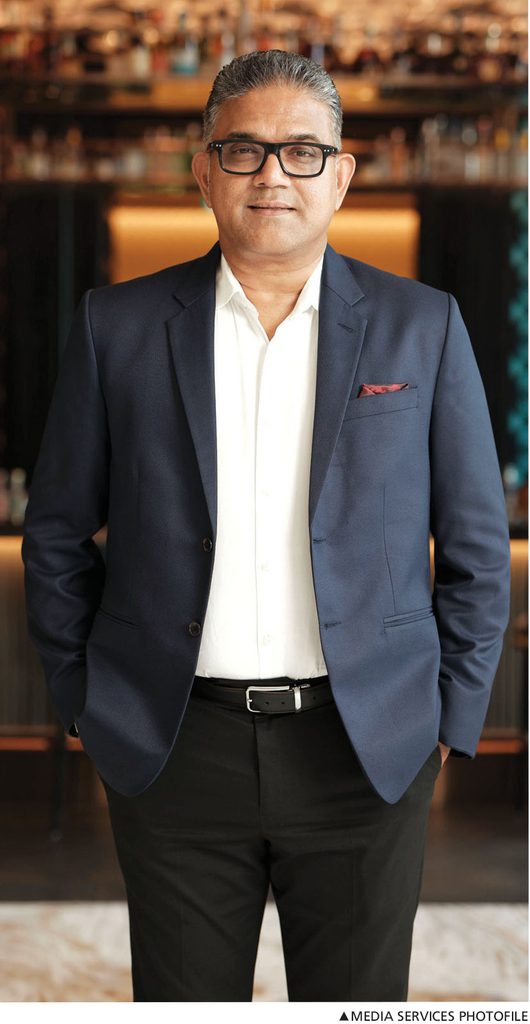
Volatile geopolitics is rewriting the rules of global travel this year. Thankfully, demand is also evolving as travellers become more deliberate, discerning and guided by ease, value and certainty in a fluid landscape.
“Geopolitical tensions are shaping global travel behaviour particularly on long haul routes. Travellers are recalibrating journeys with shifting routing decisions, flight durations and the overall travel experience becoming more complex,” notes Kamal Munasinghe.
He points out that the impact is both operational and behavioural: “Travellers are more cautious, taking longer to commit and sensitive to complexity. But within this disruption lies opportunity. There is a clear opening for Sri Lanka to reposition within more accessible, stable and regionally connected travel corridors,” he emphasises.
AVIATION VOLATILITY A structural shift in global aviation routes is now underway as airlines are avoiding conflict affected airspace.
As Munasinghe observes: “These changes are not temporary adjustments but part of a broader reconfiguration of global aviation patterns. Over time, this will reshape airline economics and destination competitiveness particularly for long haul leisure markets that are highly price sensitive.”
Rising fuel prices are also directly impacting global travel affordability. Volatile energy markets are pushing airlines to pass on costs, resulting in higher airfares especially for long distance travel.
He explains: “The result is a more selective traveller profile, where value perception and destination differentiation become far more important than pure price competitiveness. In this environment, destinations must compete on value and experience rather than cost alone.”
Unfortunately, Sri Lanka remains meaningfully exposed to disruptions in Middle Eastern transit hubs. Dubai, Doha and Abu Dhabi continue to serve as critical connection points for long distance arrivals, and any disruption directly affects capacity, pricing and convenience.
“This dependency underscores the need for diversification and reinforces the need for Sri Lanka to strengthen regional connectivity,” he cautions.
ADAPTIVE TOURISM Traveller behaviour is shifting rather than collapsing. The industry is witnessing longer decision making timelines, shorter booking windows, and increased sensitivity to price and routing.
“This is a timing and confidence issue rather than a structural demand decline, a distinction that signals underlying resilience despite near term volatility,” he adds. Sri Lanka’s tourism industry demonstrates resilience but remains structurally exposed to external shocks. The industry has adapted through multiple cycles of disruption, from global economic shifts to geopolitical uncertainty.
“The key strength lies in adaptability but the structural vulnerability is dependence on external conditions that are beyond control,” Munasinghe explains. This reinforces the importance of diversifying both source markets and connectivity channels.
A gradual shift toward regional and short haul travel is further reshaping global demand patterns.
He adds: “This represents a positive shift for the country by strengthening the relevance of regional markets such as India and Southeast Asia while preserving long haul appeal. India has become one of the most important stabilisers in our tourism ecosystem. Beyond volume, it provides resilience during periods of global disruption, making it essential for long-term balance and sustainability.”
In addition, rising airfares are reshaping Sri Lanka’s competitiveness as a destination. “Its competitiveness will depend less on absolute pricing and more on perceived value and experience differentiation,” he explains.
As airlines optimise capacity toward higher yield routes, destinations must clearly articulate their value proposition.
REGIONAL HUB “Colombo is entering a more opportunity driven phase of tourism recovery. While leisure travel led the initial rebound, the city is now benefiting from steady growth in business travel, regional movement and short urban stays,” he adds.
Global shifts particularly in the Middle East are also creating new opportunities with markets such as Australia, Russia and China gaining prominence.
“Colombo is no longer merely a gateway; it is gradually evolving into a destination in its own right. Its competitive positioning differs fundamentally from regional city destinations as it does not compete on scale, infrastructure or global connectivity. Instead, its strength lies in intimacy, authenticity and proximity to diverse experiences,” he muses.
Spending behaviour is also evolving with “mid-market travellers focussing on value while premium segments prioritise experience quality, exclusivity and personalisation over traditional service formats.”
STRATEGIC OPPORTUNITY Western markets are recovering steadily but are no longer the dominant growth engine. Emerging markets are now central to Sri Lanka’s tourism strategy.
“India remains the most consistent and high volume contributor, while China, Russia and shifting Middle Eastern travel patterns represent significant future upside,” Munasinghe notes.
“The country’s opportunity lies in shifting decisively toward value based positioning. High value travellers are driven by depth of experience rather than price, hence the need to build demand through authenticity, emotional connection and differentiated experiences,” he adds.
Perceptions around pricing in Colombo’s five-star hotels are shaped more by expectations than actual value. He opines that when experiences are consistent, personalised and authentic, guests are willing to accept premium pricing.
“The challenge is not pricing itself but ensuring that the experience consistently reflects the value being delivered,” he affirms.
The meetings, incentives, conferences and exhibitions (MICE) segment remains an important pillar for the city’s hotel sector, particularly in supporting mid-week occupancy and corporate demand, although it is still in recovery.
“Sri Lanka must address structural gaps in air connectivity, convention infrastructure and event facilitation to compete regionally. Improving accessibility and execution standards will be critical,” Munasinghe points out.
EXPERIENTIAL TOURISM “Luxury hospitality is undergoing a structural shift towards personalisation, wellness and experience led travel. Guests no longer seek standardised luxury but meaningful, tailored experiences. Emotional connection, cultural immersion and wellbeing are becoming central to the offering,” Munasinghe asserts.
In his view, this requires hotels to evolve from service providers to experience curators. “Furthermore, emerging segments such as digital nomads, short-stay luxury travellers and experience driven urban explorers present new opportunities for Colombo’s evolving proposition,” he notes.
In addition, he avers that digital marketing and global brand positioning have become central to destination competitiveness.
Munasinghe claims: “The next generation of travellers is influenced less by traditional campaigns and more by authentic, experience led storytelling. Creator driven content and emotional narratives now shape perception far more than institutional messaging.”
