
Employer-employee partnerships
Q: You’ve built your career in Sri Lanka, India and the UK. How has each country shaped your professional outlook?
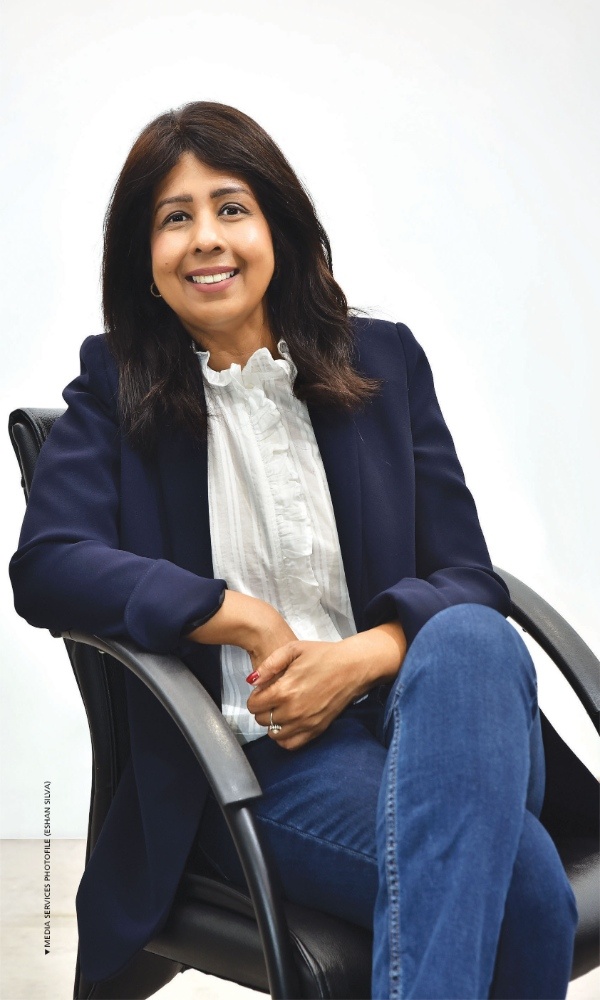
A: Working across Sri Lanka, India and the UK has shaped my approach to leadership and organisational change. Sri Lanka provided my grounding – a strong sense of resilience and adaptability. Early on, I learned that influence often comes from trust, relationships and an ability to work within ambiguity, rather than from hierarchy alone.
India added scale and pace to that foundation. Working in large diverse environments taught me to operate around complexity, manage competing priorities and make decisions with incomplete information. The exposure to rapid growth and constant change sharpened my ability to think systemically while remaining grounded in execution.
The UK has added structure, governance and accountability. It has reinforced the importance of clarity, transparency and measurable outcomes.
Together, these experiences have shaped a global mindset that balances empathy with rigour and cultural sensitivity with delivery discipline.
Q: So what were the adjustments you had to make when transitioning into the UK’s corporate environment?

A: One of the key adjustments was adapting to a culture of explicit communication, where assumptions are directly challenged and expectations are often articulated with greater precision.
I had to become more deliberate in how I framed my thinking, articulated rationales and evidenced decisions.
Another shift was navigating a lower power distance culture, where challenge is encouraged regardless of seniority. This helped me to be more open to debate and better at creating space for dissenting views.
And over time, this strengthened my own leadership practice, and helped me operate more effectively in highly regulated and matrixed organisations.
Q: How do leadership styles differ between South Asia and the UK – and how have you adapted your own style?
A: Leadership in South Asia tends to be hierarchical with an emphasis on personal authority and relationship based influence. The UK approach is more participative with greater expectation of consultation, explanation and shared ownership.
I have adapted by blending both approaches: I remain value driven and relational, while being clear about decisions, accountability and outcomes.
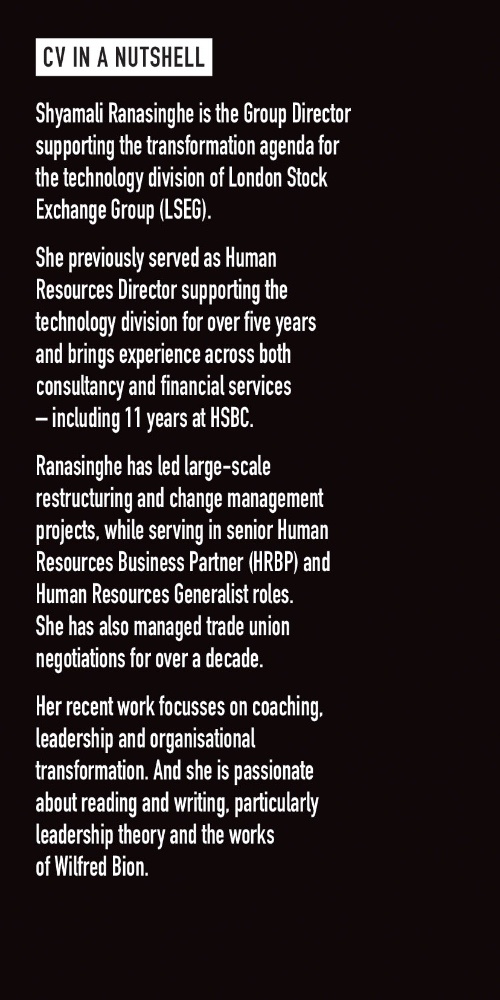
Q: Given that you currently support the transformation agenda for the tech division of the London Stock Exchange Group (LSEG), what does ‘transformation from a people perspective’ mean in practice?
A: From a people perspective, transformation is about mindset, capability and trust. It means ensuring people understand the ‘why?’ behind change, feel equipped to operate in new ways and are supported through uncertainty.
In practice, this involves redesigning roles, evolving leadership capability, rethinking performance expectations, and embedding fair and transparent ways of working.
Transformation only succeeds when people feel psychologically safe, aligned to purpose and clear on what’s changing.
Q: How has the nature of employer-employee relationships evolved in recent years?
A: The employer-employee relationship has shifted towards greater transparency, mutual responsibility and expectation of fairness. Employees expect clarity, inclusion and flexibility, while organisations need adaptability, accountability and trust.
In international organisations, this relationship is shaped by diverse cultural and regulatory contexts. Leaders must navigate these differences carefully, ensuring consistency of principles while allowing for local context.
The focus has increasingly moved from entitlement to partnership.
Q: You’ve recently focussed on leadership through personal transformation in the age of AI. What sparked this shift?
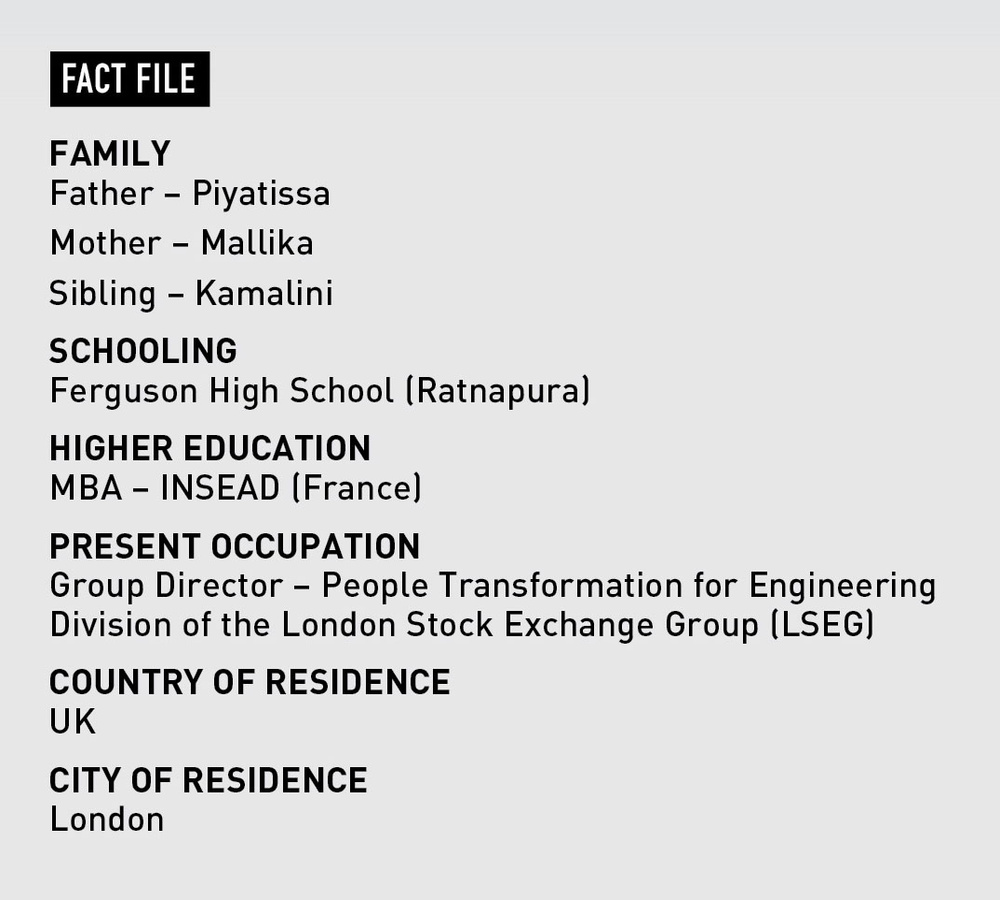
A: Artificial intelligence is changing how organisations operate, decide and compete but leadership transformation must begin at a far more personal level.
In an AI enabled world, the real differentiator is not technological capability – it’s the readiness of leaders to adapt, learn and lead humans through change.
AI also accelerates the need for self-aware leadership by introducing speed, scale and uncertainty into decision making. Leaders are required to make judgements in environments where information is abundant but clarity isn’t.
In this context, leaders who understand their own biases are better equipped to use AI, shifting leadership from knowing the answers to asking the right questions.
Q: How has being Sri Lankan influenced your leadership style?
A: Growing up in Sri Lanka during three decades of conflict built resilience and perspective, making uncertainty a constant rather than an exception. That experience has helped me with calm decision making, moral clarity and the ability to remain steady in a volatile environment.
I grew up in a traditional family structure shaped by strong Sri Lankan values around family, community, respect and duty. These cultural foundations continue to influence how I think, decide and show up.
