
Stories in a fragmented world
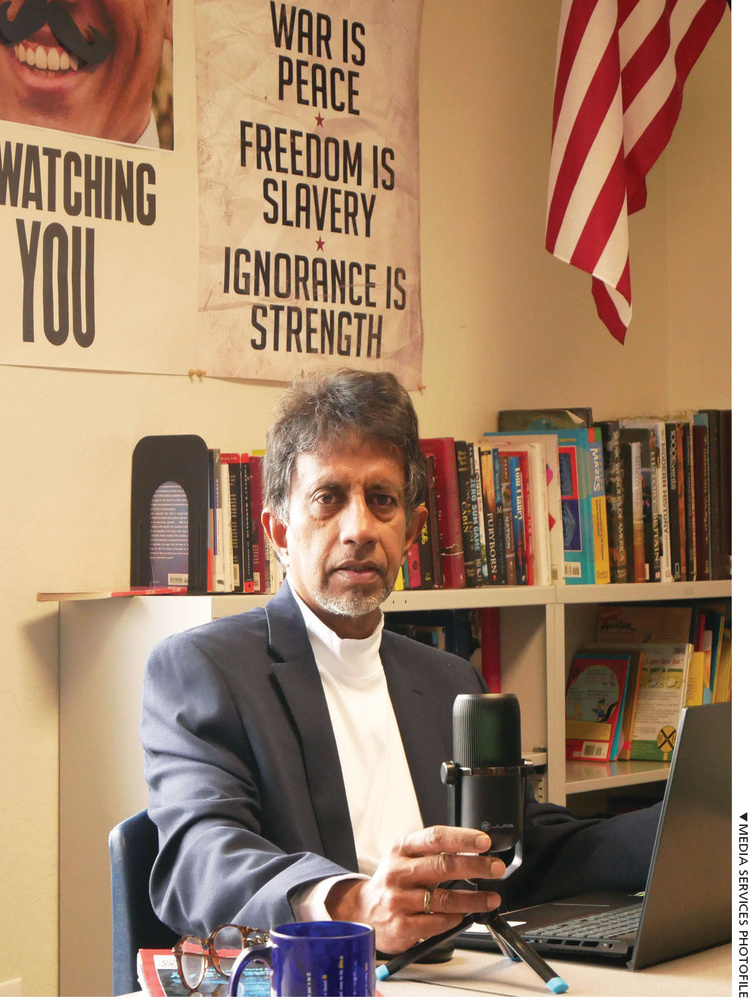
Angelo Fernando is a computer and technology teacher who strives to balance emerging technology with traditional tools in the classroom. A podcaster for the past six years and manager of his school’s video channel, Angelo has also overseen the publication of the school’s print newspaper for the past two years and serves as a steward of two Little Free Libraries.
A veteran technology writer, Fernando contributed articles on the intersection of media and technology to LMD for 24 years. His podcast (Wide Angle) is available on Apple Podcasts and Spotify. He is also the author of Radio Silence, a recent memoir available on Amazon and Chat Republic (2014).
Q: You’ve had a multifaceted career – from advertising in Sri Lanka to teaching and writing in the US. What motivated your transition across these very different fields?
A: I actually began my career at a bank before moving into advertising. If not for Harshini Tirimanne, my manager at Indo Suez Bank – who encouraged me to enrol at the University of Peradeniya – I might never have taken that detour.

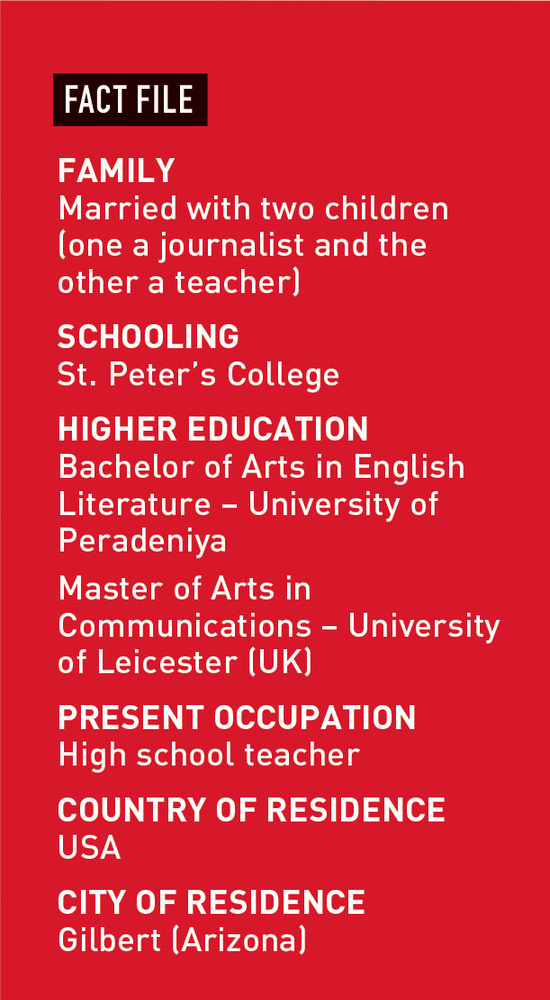
My time at Peradeniya under the tutelage of professors Ashley Halpe and Thiru Kandiah shaped my interests in advertising, writing, marketing, communications and eventually, teaching.
As the saying goes, we stand on the shoulders of giants, don’t we?
Q: You’ve worked as a communications strategist, creative director and now an educator. How do these roles intersect in your current work?
A: Funnily, I often wonder about that myself! I teach a computer and technology classes, so the common thread is communication.
A computer is much more than a glorified typewriter or web browser. It can be a design tool, a recording studio for a podcast, a video editing suite or even a publishing platform. In many ways, the skills I developed in communications and creative work drive how I engage with students today.
Q: How do you see the role of storytelling evolving in today’s fragmented media landscape?
A: We are made for stories – and shaped by them.
Let’s step back from today’s fragmented media – our TikToks, blogs and social platforms – and consider societies where storytelling was central to daily life. Oral storytellers, poets and minstrels imparted values and social norms around campfires, and on street corners. In many ways, they were the real influencers long before the label was appropriated by anyone with a camera.

While fragmentation is viewed negatively, it also serves as a counter to traditional mass media. It offers people access to diverse stories across cultures. We are no longer limited to a one-size-fits-all model of communication controlled by those who own the presses or broadcast networks.
Q: In your view, is the media industry becoming more democratised – or more controlled by platforms?
A: I would lean towards the latter – although I can only comment on media in the US.
Based on a very unscientific observation, there’s a growing difference between people who source their information directly from news outlets, and those who consume it through platforms such as Instagram, Facebook, Google or YouTube.
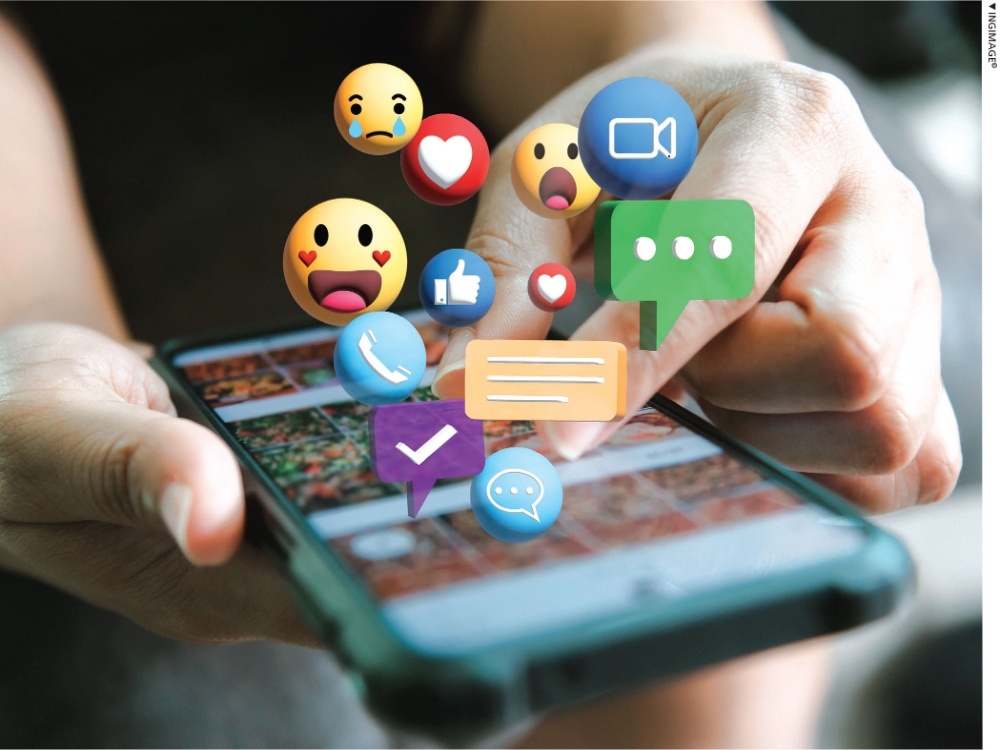
The issue is not only how these platforms skew people’s understanding of events but also how the medium itself limits consumption habits. Reading a 500 word article is often less appealing when a summary, screenshot, headline or quote is available with a single swipe.
It is also worth noting that many of these platforms are owned by a small number of corporations. And their algorithms decide how we receive information. An abundance of channels and platforms doesn’t necessarily democratise information – in some cases, it simply drowns it.
Q: From your perspective as a technology educator, how is digital transformation reshaping the workforce?
A: In powerful ways. Remote work has become the norm and employees now have access to more resources, making continuous learning increasingly valuable.
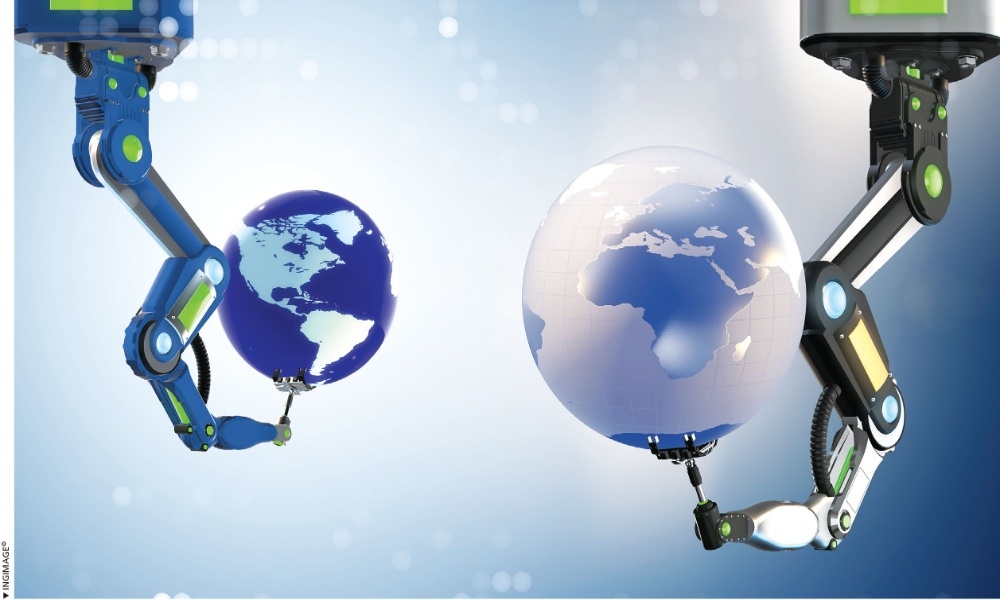
I see digitised information as a huge asset. My only hope is that we don’t substitute offices with laptops, books with tablets and teachers with robots.
Face-to-face communication is gradually eroding in many workplaces. Zoom meetings often feel like a necessary evil. Online schools are also cropping up, sometimes overlooking the need for socialisation.
Recently, I came across a shocking example of companies building AI driven schools, replacing teachers with guides. We should be careful what we wish for!
Q: So what impact is AI having on communications, creativity and content production?
A: Perfect segue! In education, the lure of using AI as a shortcut for generating content is irresistible to students.
Often, I see students scour the top result of a Google search, which happens to be from Gemini, and try to use it for an essay or presentation. This creates teachable moments about plagiarism and why the human brain – with approximately 86 billion neurons – can be infinitely more creative than a machine.
There is also a growing cottage industry for AI generate books. The lovely word for this, as many readers would know, is ‘slop.’ Whenever I hear the term ‘content creators,’ I worry that we’re leaning more towards feeding ourselves slop.
A New York Times (NYT) journalist was recently embarrassed after unwittingly using AI to write a book review. Yes, ChatGPT and Claude can put together reasonably good content but in terms of creativity, I’d still rate them ‘C.’
Claude even acknowledged a form of plagiarism in an interview I conducted with the app, which I later wrote about in a DailyFT piece. As educators, creative directors and media professionals, our role is to push back where possible. But the reality is that the train has already left the station.
Q: How has social media changed public discourse and the way information is consumed globally?
A: Oh my! It has maligned public discourse terribly! As a sidenote, I feel embarrassed about how naively optimistic I was in my 2014 book Chat Republic. It isn’t breaking news that social media has encouraged people to rant and opine excessively. I teach a unit on digital citizenship each semester, and often think we adults should have had this kind of primer before platforms such as Facebook and Myspace came on board.
On the consumption side, there are a few bright spots – podcasts for instance, continue to enjoy a coveted spot in the media ecosystem.
Q: What trends do you believe will define the next decade of media and technology?
A: Trends are always risky to predict. I ask my students to complete a written exercise titled ‘When keyboards disappear,’ where they imagine what would happen. Sometimes, I switch it to ‘What would you do if the internet disappeared?’
Their responses are both hilarious and thought-provoking. They begin to see how everything exists as a digital layer today. When TV dominated, who would have predicted TikTok?
If someone was to read this magazine in 2031, it may well be accessed through a form of media technology we never saw coming. I hope that whatever emerges as new media does not further distance us from one another.
As you can see, I may have dodged the question – and intentionally so!
