
BEYOND THE POSTCARDS
Sri Lanka is often celebrated for its iconic landmarks, sun-drenched beaches and misty hill country. Yet beyond the familiar postcards lies an island filled with hidden waterfalls, forgotten kingdoms, sacred rock temples, remote islands and landscapes steeped in legend.
From the soaring cliffs of Yapahuwa to the windswept shores of Mannar, here are eight extraordinary destinations that reveal the island’s remarkable soul.
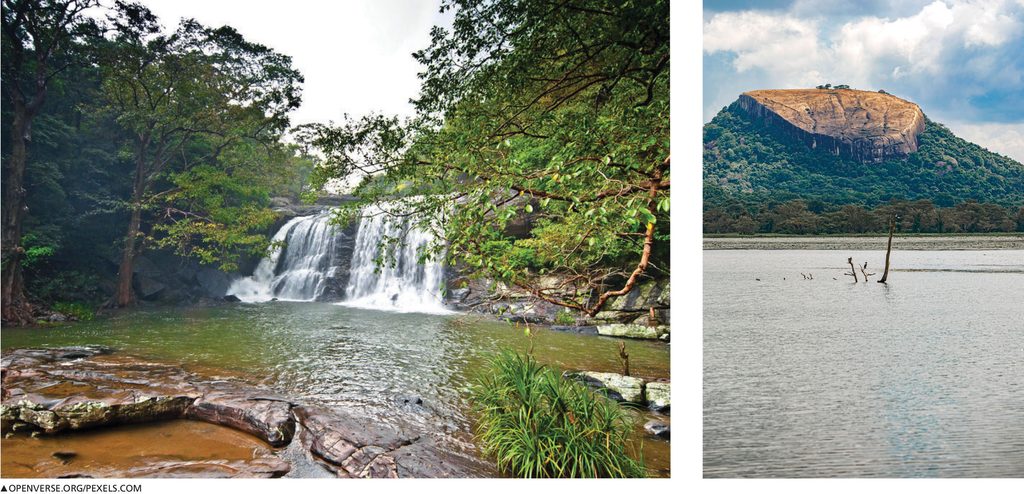
WALK BEHIND A WATERFALL Hidden in the lush countryside near Matale, Sera Ella is one of Sri Lanka’s most enchanting waterfalls. Cascading from a height of around 10 metres, the falls are not the tallest on the island but what they lack in scale they make up for in charm.
Fed by the Hunumadala River, Sera Ella is famed for its broad curtain of water and the cave like recess behind the cascade, allowing visitors to walk safely behind the rushing veil. The surrounding landscape is a blend of forest, paddy fields and rural village life, making the journey itself as rewarding as the destination.
During the rainy season, the waterfall swells dramatically, creating a thunderous spectacle while in drier months it becomes ideal for a dip in the natural pools below.
ABOVE THE FOREST CANOPY Overshadowed for years by its famous neighbour Sigiriya, Pidurangala has emerged as one of Sri Lanka’s most rewarding climbs. Rising behind the iconic rock fortress, this ancient monastic site combines history, adventure and the finest panoramic view in the Cultural Triangle.
The climb begins at the Pidurangala Temple, where visitors pass shrines and a reclining Buddha statue before ascending through forested paths and rocky stairways. The final stretch requires a scramble over giant boulders. Once at the summit, the reward is unforgettable: Sigiriya Rock standing majestically above the jungle canopy, especially magical at sunrise or sunset.
Pidurangala also holds historical importance. It is believed to have housed monks displaced during the construction of Sigiriya by King Kashyapa in the fifth century. Remnants of caves and monastic structures still remain, connecting the climb to the island’s ancient past.
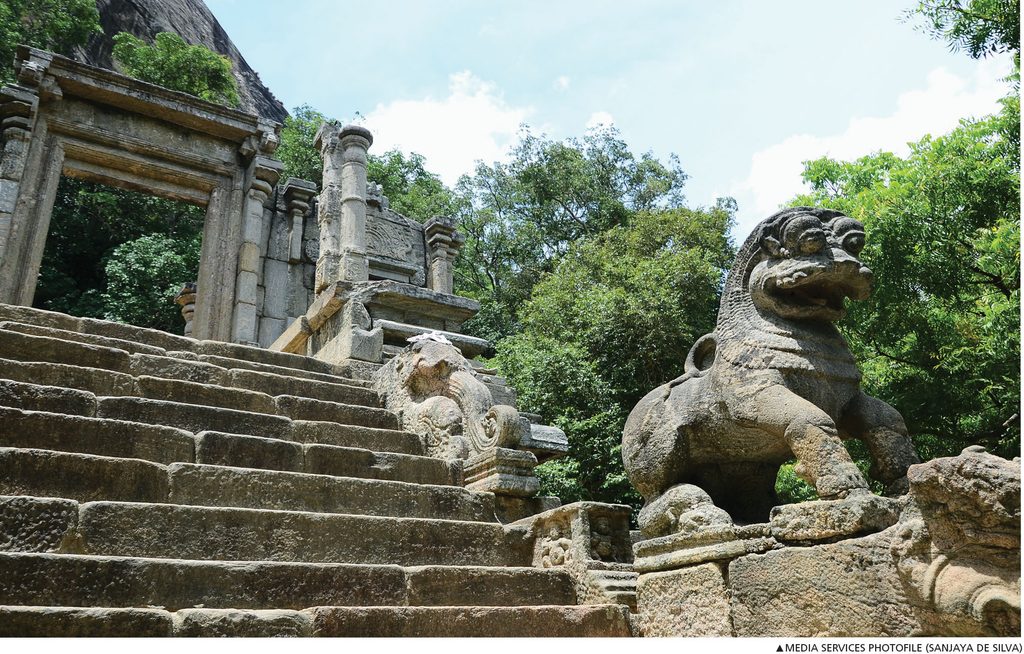
FORGOTTEN ROCK KINGDOM Long before modern capitals rose and fell, Yapahuwa served as the royal seat of Sri Lanka in the 13th century. Today, this magnificent archaeological site in the North Western Province remains one of the island’s most underrated historical treasures.
Built atop a towering granite outcrop, Yapahuwa once functioned as both a fortress and palace, designed to defend the Sacred Tooth Relic during a time of invasion. Its most celebrated feature is the grand stone staircase that ascends dramatically towards the summit.
Flanked by ornate lion sculptures and intricate carvings, the staircase is often compared to the architecture of ancient Southeast Asia and stands among the finest examples of medieval Sri Lankan craftsmanship.
At the top lie the ruins of walls, reservoirs and royal structures, along with sweeping views of forests and villages below. Peaceful and uncrowded, the site allows visitors to wander through history in solitude.
LITTLE SIGIRIYA OF THE SOUTH Rising dramatically from the flat plains of Tangalle, Mulkirigala Raja Maha Viharaya is one of southern Sri Lanka’s most spectacular temple complexes. Often referred to as ‘Little Sigiriya,’ this ancient monastery is built across a series of rocky terraces that require visitors to climb stairways carved into stone.
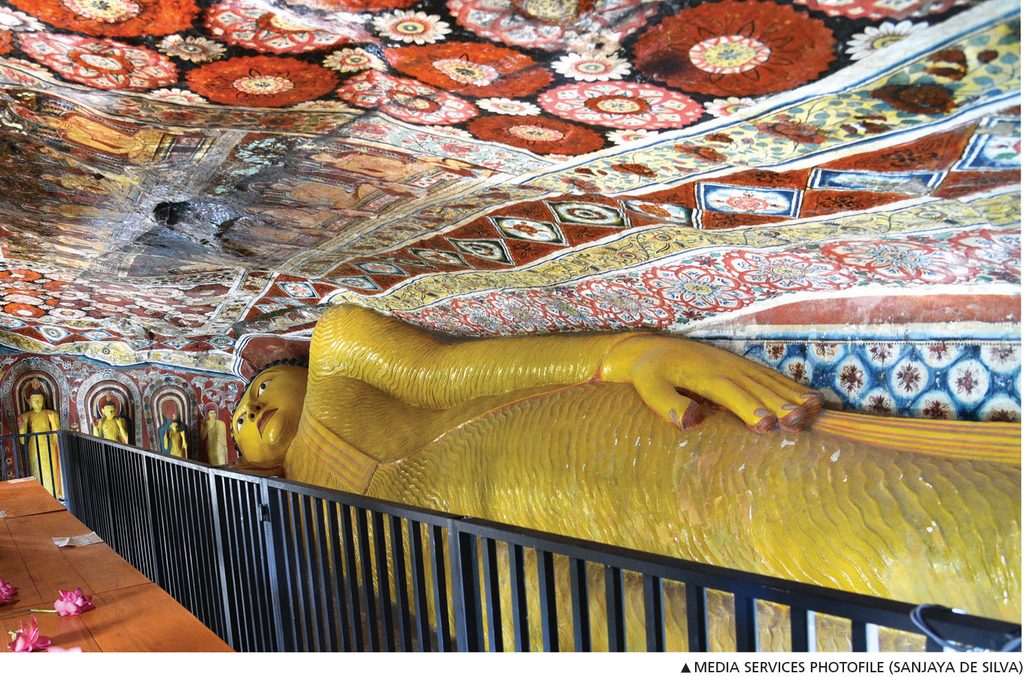
Dating back more than 2,000 years, the temple is believed to have received royal patronage during the reign of King Kavantissa. Along the ascent, visitors encounter cave shrines filled with Kandyan era murals, Buddha statues and inscriptions that tell stories of devotion. Each level reveals another sacred space, framed by forest and open sky.
At the summit, panoramic views stretch across the southern landscape – paddy fields, distant villages and the shimmering coastline on clear days.
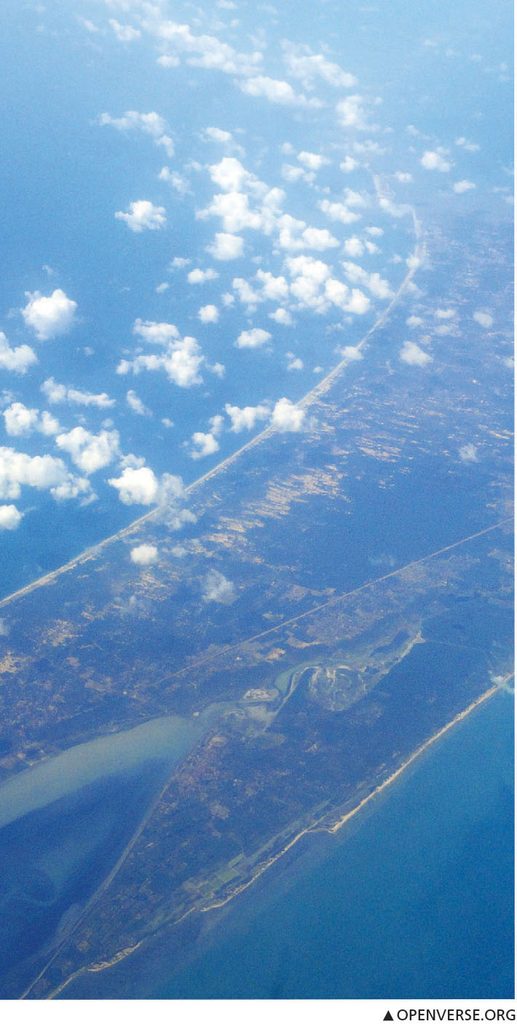
WHERE LEGEND MEETS GEOGRAPHY Stretching between northwestern Sri Lanka and southern India lies one of the region’s most fascinating formations: Adam’s Bridge, also known as Rama’s Bridge or Ram Setu. This chain of limestone shoals and sandbanks extends from Mannar Island towards India, appearing in satellite imagery as a broken pathway across the sea.
The bridge carries immense mythological significance in the Hindu epic Ramayana, where it is believed to have been built by Lord Rama’s army to rescue Sita from Lanka. Whether viewed through legend or geology, the site captures the imagination like few others.
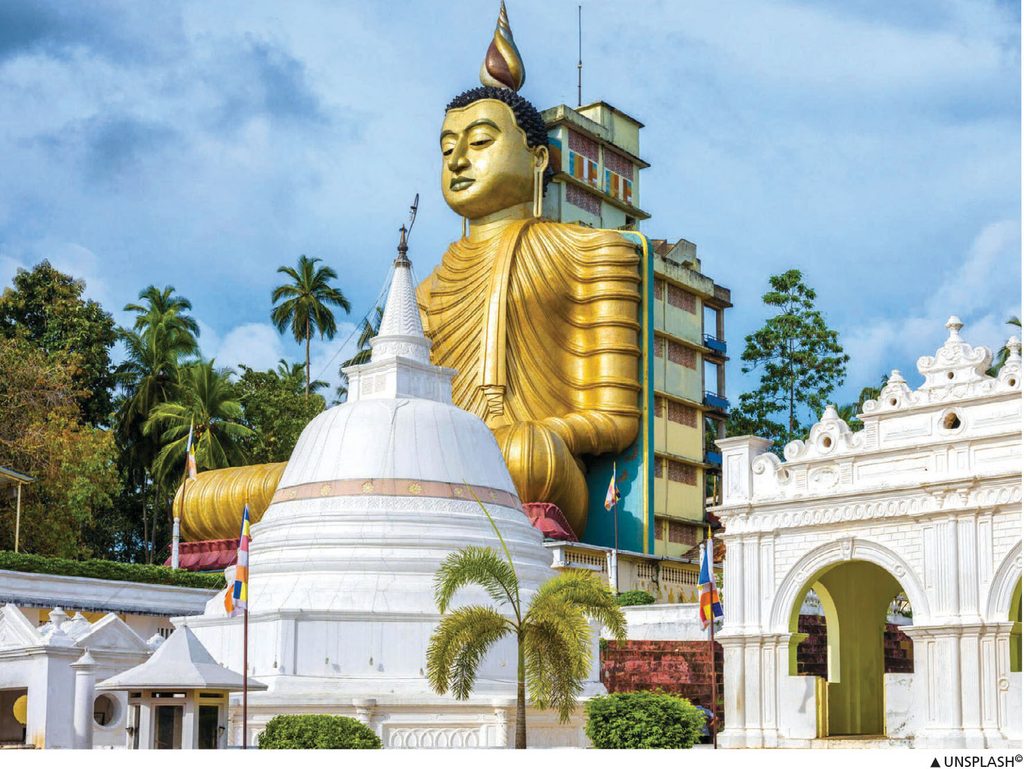
HOME OF A GIANT BUDDHA Near Dikwella in the deep south stands one of Sri Lanka’s most striking religious landmarks: Wewurukannala Viharaya. Instantly recognisable by its towering seated Buddha statue, the temple has long been a place of pilgrimage and fascination.
The giant Buddha, rising above the surrounding village, is among the tallest in the country and can be seen from afar. Inside the temple complex are painted halls depicting scenes from the Buddha’s life, along with murals and statues that reflect the craftsmanship of another era.
One of the more unusual aspects of Wewurukannala is its vivid display portraying the consequences of bad deeds, historically intended as a moral lesson. These dramatic sculptures and scenes offer insight into older forms of Buddhist storytelling and education.
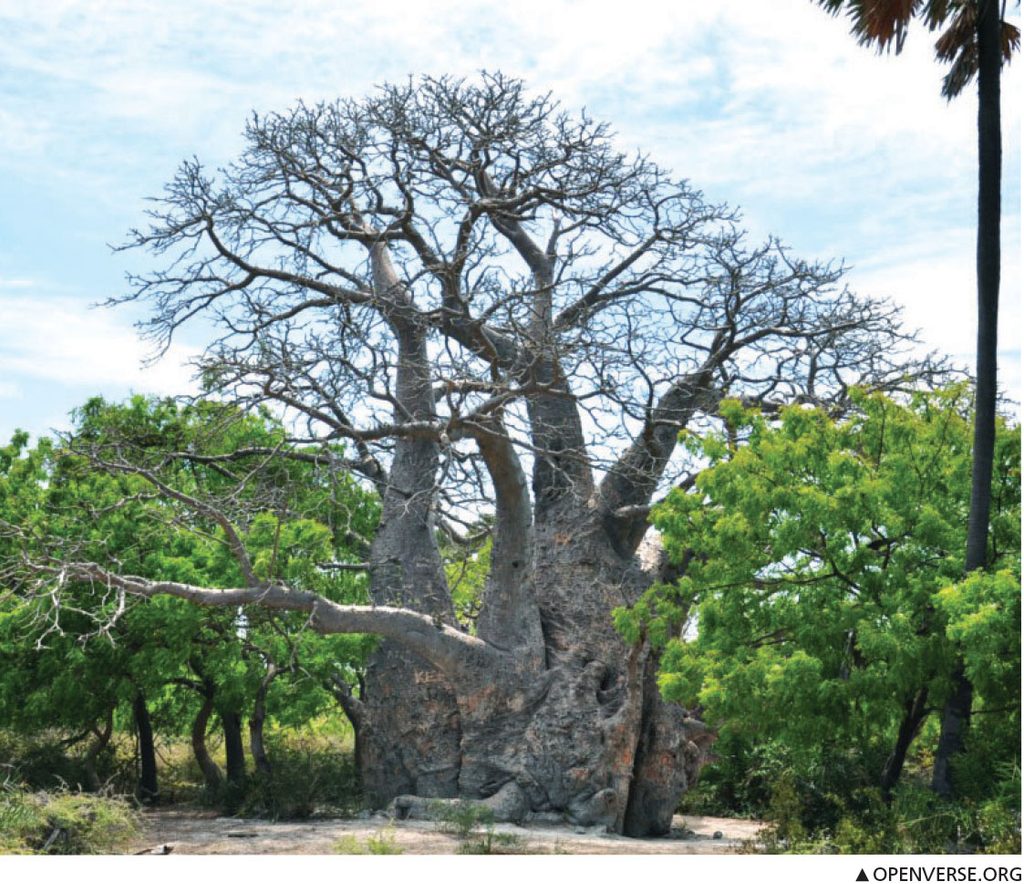
WINDSWEPT BEAUTY ON THE EDGE Connected to the mainland by causeway, Mannar Island feels unlike anywhere else in Sri Lanka. Dry, windswept, and shaped by centuries of trade and migration, it possesses a rugged beauty defined by baobab trees, shallow lagoons, colonial ruins and endless skies.
Historically, Mannar was a prized centre for pearl fisheries and maritime commerce. Portuguese and Dutch influences remain visible in the architecture of old churches and forts while Tamil culture shapes daily life across the island. The famous baobab tree, believed to have been brought by Arab traders centuries ago, stands as a symbol of Mannar’s global past.
Nature lovers are equally drawn to the island. Mannar lies along major migratory bird routes, making it a paradise for birdwatchers. During the season, flamingos and other waterbirds gather in nearby wetlands.
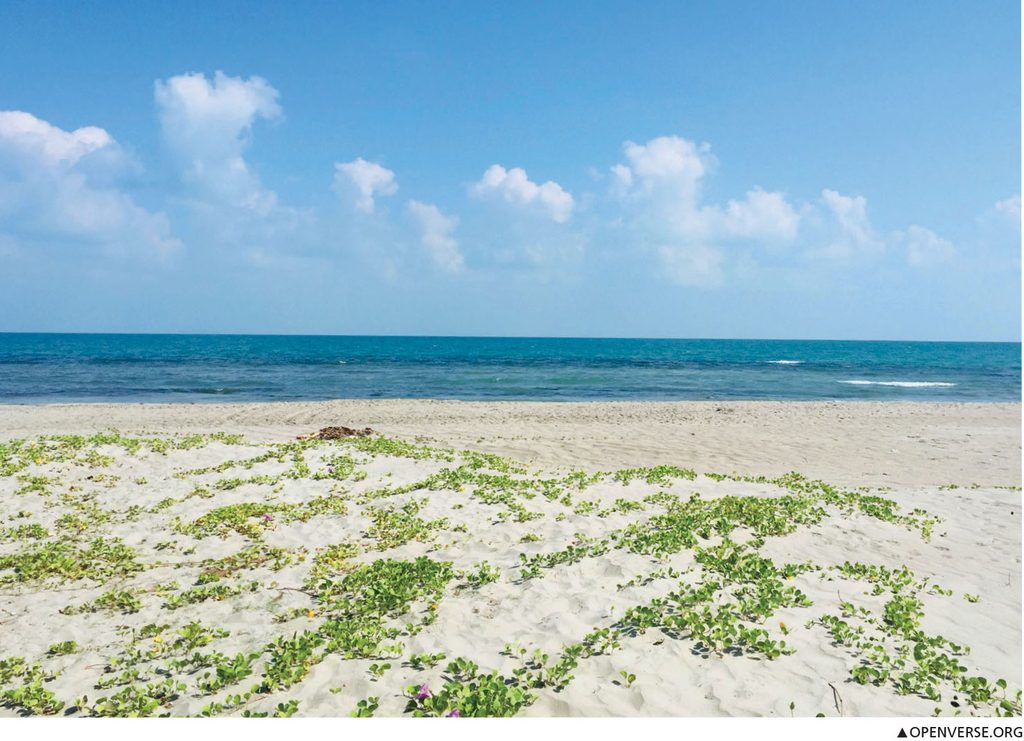
JAFFNA’S TROPICAL ESCAPE Located on Karainagar Island off the Jaffna Peninsula, Casuarina Beach is often regarded as one of the best beaches in northern Sri Lanka. Named after the rows of casuarina trees that once lined its shore, the beach is loved for its shallow, calm waters and relaxed atmosphere.
Unlike the dramatic surf beaches of the south, Casuarina is gentle and inviting. The sea remains shallow for a considerable distance, making it ideal for families and leisurely bathing. Soft sand, warm waters and open horizons create a setting that feels peaceful rather than crowded.
The journey there adds to the experience, passing causeways, lagoons and glimpses of northern coastal life. Visitors can easily combine a beach outing with explorations of Jaffna’s cultural landmarks, cuisine and islands.
Sri Lanka’s greatest wonders are not always the ones that appear on every itinerary. Sometimes they lie hidden behind waterfalls, atop forgotten citadels, inside sacred caves or along distant shores shaped by wind and legend.
For travellers seeking something richer than the expected, these places offer the chance to experience Sri Lanka not just as a destination but as a discovery.
