
Field notes from the wild
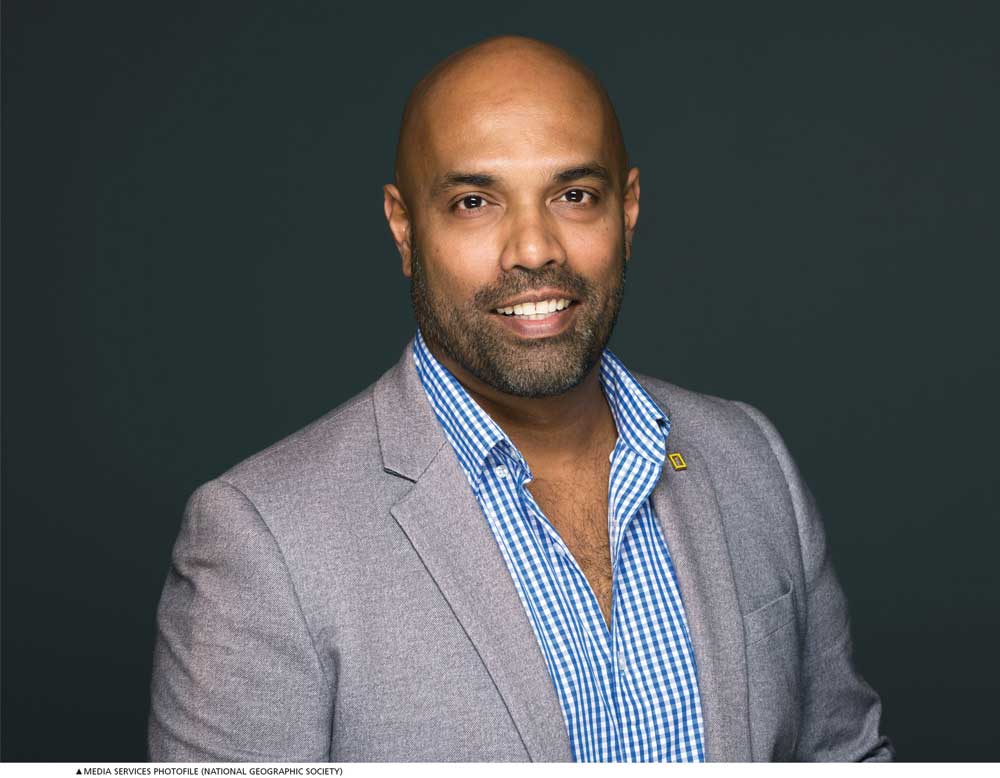
Q: Growing up in Sri Lanka, what sparked your fascination with reptiles and wildlife?
A: I was fortunate to grow up in an environment surrounded by nature and in a home that encouraged curiosity. My parents were science graduates, so there was always an underlying science vibe; but more importantly, I spent time outdoors observing and interacting with wildlife.
While most people were drawn to the cute and cuddly, I was fascinated by the scaled, slimy and crawly – especially reptiles. They felt mysterious and mesmerising but often misunderstood, which made me want to understand them better.
Q: How did your early experiences in Sri Lanka shape your career path as a scientist?
A: From primary school onwards, I was deeply interested in wildlife – and that continued through my time at Trinity College, where school societies, supportive teachers and strong mentorship made a difference.
The principal at the time – Prof. Warren Breckenridge – was himself a zoologist, which added to the culture of curiosity.
I began publishing, attending conferences and building networks early on, which gave me exposure beyond my years. I was also selected by the International Union for Conservation of Nature (IUCN) as a field scientist while still at school.
Those early experiences in research and collaboration laid the foundation for the work I do today.

Q: Moving from Sri Lanka to Australia for your PhD, what were the transitions both academically and personally?
A: It was a major shift – especially as I chose to work in remote outback regions. I lived in isolated areas – often in a caravan – conducting fieldwork and studying crocodiles, much of it independently.
The experience came with its own cultural adjustment. I had the opportunity to meet remarkable people in the outback and work closely with Aboriginal communities. It was a deeply enriching experience, which built confidence and resilience.
Academically, I was working at the frontier, studying systems in ways that hadn’t been done before, uncovering new behaviours and ecological insights, which made the journey deeply rewarding.
Q: Based on your work on how species respond to environmental change, what are the most urgent threats facing reptiles today?
A: They face a combination of pressures including climate change, habitat loss and fragmentation, urbanisation and invasive species.
Much of my work focusses on how reptiles adapt to human dominated landscapes, where one of the main challenges is coexistence with people who often fear or do not tolerate them.
Addressing this requires an understanding of human behaviour, cultural perceptions and economic realities, while designing solutions that work for both people and wildlife.
Q: You’ve studied ecosystems from Sri Lanka to Australia. What differences and similarities stand out in conservation challenges?
A: I’ve had the privilege of working in nearly 20 countries and five continents; and while each has its own unique context, common challenges such as habitat loss, human wildlife conflict and climate pressures emerge repeatedly.
The differences often lie in capacity, resources and public awareness.
In Sri Lanka, one of the biggest challenges is education and demonstrating that coexistence with wildlife can bring tangible benefits. In Australia, although policy support and resources are generally stronger, balancing development with conservation remains a challenge.
In both cases, conservation comes down to people, how they perceive wildlife and their willingness to share space with it.
Q: Does Sri Lanka provide sufficient opportunities for aspiring scientists or is venturing overseas still necessary?
A: Sri Lanka has produced many outstanding scientists who have built impactful careers locally, so it is certainly possible to succeed without leaving the country.
At the same time, it comes down to personal choice and what you want from your career. For me, working at a global scale meant gaining experience in different countries.
Staying local can make for deeper long-term impacts within a system you understand well, while going abroad offers exposure, networks and perspectives. Ultimately, what matters most is how you use the opportunities available to contribute meaningfully to science.
Q: How important is storytelling in driving conservation awareness?
A: Storytelling is central to conservation. While there is no shortage of good science, there’s often a gap in communicating it effectively to the public, decision makers and communities on the ground.
Although platforms such as National Geographic have allowed me to engage international audiences, an important focus is to bring those stories back to Sri Lanka in local languages.
Through my YouTube channel Ru Goes Wild, I aim to make science more accessible and relatable – especially for young audiences.
Conservation comes down to people, how they perceive wildlife and their willingness to share space with it
Conservation comes down to people, how they perceive wildlife and their willingness to share space with it
