
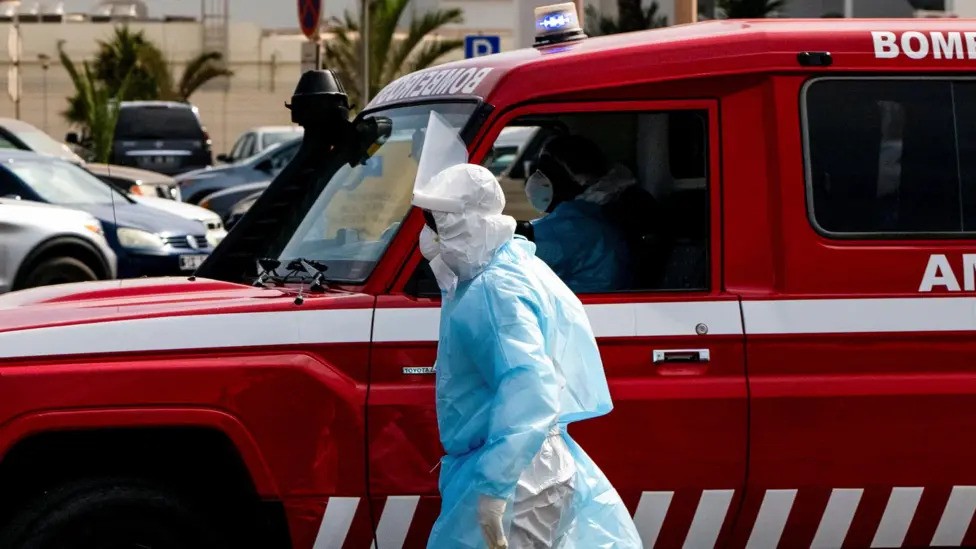
The outbreak of hantavirus on a cruise ship carrying passengers from across the world is a situation that authorities say they are taking incredibly seriously.
Three passengers have died either on board or after travelling on the ship, which set sail from Argentina a month ago.
Four others have been medically evacuated from the ship for treatment.
BBC – 7 May 2026
A huge operation is in place to trace people potentially exposed to the virus who have already taken flights home to numerous countries, including the UK, South Africa, the Netherlands, the US and Switzerland.
Health experts stress the risk to the general public is low. So how worried should we be?
‘This is not Covid’
In an update on Thursday, Dr Maria Van Kerkhove from the World Health Organization (WHO) stressed it was not the start of a pandemic, saying: “This is not Covid, this is not influenza, it spreads very, very differently.”
Unlike diseases such as measles, which are highly contagious and spread easily, the Andes strain of hantavirus behind the outbreak is not that infectious.
Human-to-human spread is possible but the risk of infections globally remains low, says WHO.
In its latest update, it says eight cases – three confirmed and five suspected – have been identified in people who were on the ship.
It is still not clear how the outbreak started.
Hantavirus typically spreads from rodents, with people infected by breathing in air contaminated with virus particles from rodent urine, droppings, or saliva.
The cruise had been visiting remote wildlife areas, so a passenger could have come into contact with the virus then, or before boarding the ship.
Experts have observed the Andes strain spreading between human patients in previous outbreaks, through very close contact and health experts believe that some of the infections on board MV Hondius may have passed between people.
Even luxury cruise ships have relatively cramped or restricted living conditions, with people sharing cabins and dining areas – places where infections could spread.
People can catch it from someone that they spend prolonged time with in close physical proximity.
The three deaths include a Dutch woman who left the MV Hondius when it stopped at the island of St Helena on 24 April. She had been sharing a cabin with her husband who previously died on board on 11 April – although it is not currently known if he is one of the confirmed cases of hantavirus.
Hantavirus is not spread in the outside world through everyday social contact like walking in public spaces, shops, workplaces, or schools, the UKHSA, external says.
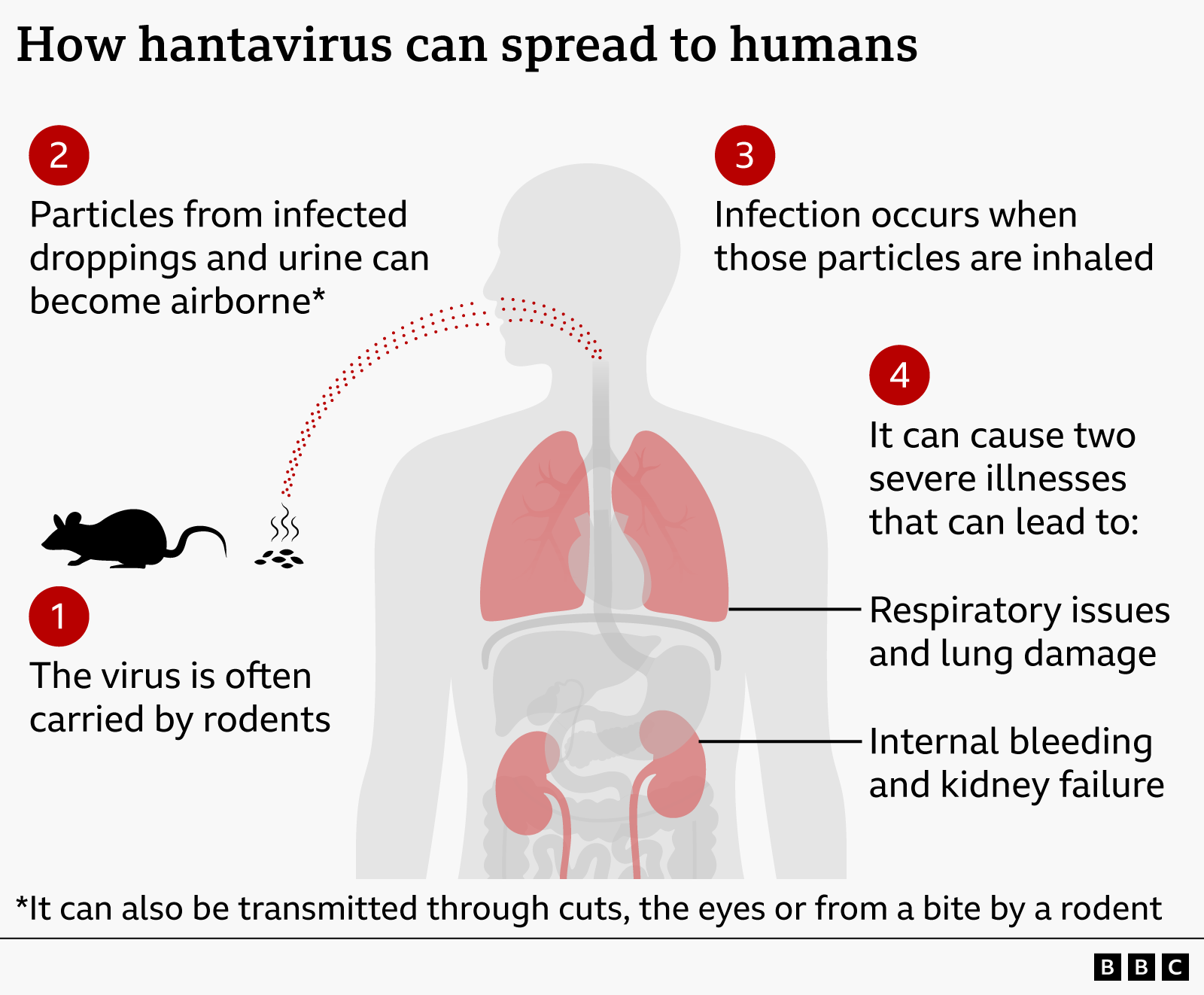
Symptoms usually appear between two to four weeks after being exposed to the virus, but can occur more than a month later. People or “contacts” who may have been exposed to the infection – including on the boat, in hospital or on any of the flights that passengers took – will be monitored.
Contact-tracing work that is under way has been “quite a mammoth effort”, Prof Robin May, chief scientific officer at the UK Health Security Agency (UKHSA) has told the BBC, and one “we will continue to do… for some time”.
