
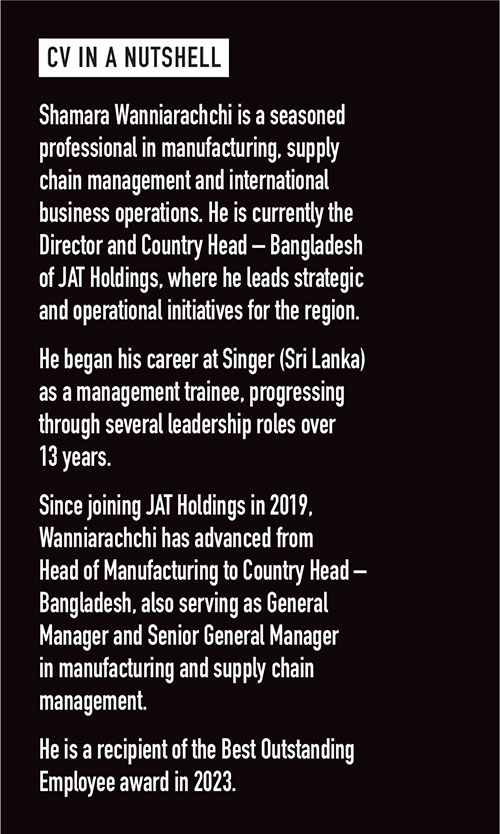
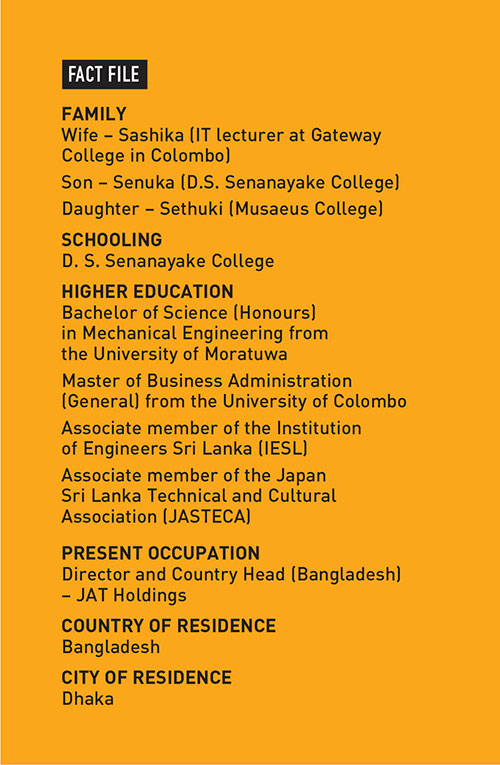
Shamara Wanniarachchi
The Sri Lanka-Bangladesh nexus
A key lesson is that understanding the local market and culture is critical

Q: What defines effective leadership in the context of Bangladesh’s business landscape?
A: Effective leadership requires a combination of strategic vision, adaptability and strong relationship building. Leaders must be able to navigate regulatory and market dynamics while inspiring trust among stakeholders.
Additionally, understanding local cultural nuances, empowering teams and fostering innovation are key to driving sustainable growth.
Q: How important is it for businesses in Bangladesh to adopt sustainable practices?
A: Adopting sustainable practices is essential for long-term growth, brand trust and competitiveness. Stakeholders expect companies to operate responsibly and minimise their environmental impact. In our sector, this means using eco-friendly materials, reducing waste and improving energy efficiency in production.
To align with this trend, organisations can invest in green technologies and sustainable supply chains, develop products with lower environmental impact and implement circular economy practices.
Transparency and communication also matter – sharing sustainability goals and achievements with stakeholders builds credibility and strengthens brand reputation. Ultimately, sustainability is a strategic advantage that drives innovation, efficiency and long-term business success.
Q: What challenges have you faced in bridging cultural differences between Sri Lankan and Bangladeshi business practices? And how have you overcome them?
A: This has been both a challenge and learning opportunity. While core business values remain the same, decision-making and communication styles – as well as expectations of employees, dealers and customers – can differ.
In Bangladesh, building personal relationships and trust is crucial. It’s also essential to understand local tastes and preferences when designing products, and ensure that product quality is suited to the local environment.
Q: And what opportunities do you see for collaboration between Sri Lankan and Bangladeshi businesses?
A: There are many exciting opportunities for collaboration – in trade, we can combine Bangladesh’s growing manufacturing and consumer market with Sri Lanka’s expertise in quality products and exports.
Technology is another promising area – by sharing knowledge in digital tools, smart manufacturing and AI driven solutions, companies can improve efficiency.
Tourism also has great potential, from creating joint travel packages to promoting cultural and ecotourism initiatives that benefit both countries. The key is to leverage each other’s strengths, share best practices and innovate together.

Q: How do you perceive the current economic situation in Bangladesh – and what key factors do you believe will influence its growth in the coming years?
A: Bangladesh’s economy faces a mix of challenges and opportunities.
The country is navigating through political uncertainty, inflationary pressures and cautious investor sentiment. This in turn has impacted public and private investments, and contributed to a slowdown in economic growth projections.
Additionally, rapid population growth is straining infrastructure and posing challenges to sustainable development.
Despite these hurdles, Bangladesh’s economic fundamentals remain resilient. The government’s focus on infrastructure development, digital transformation and sustainability provide a foundation for future growth.
By addressing political stability and managing population dynamics, the country can harness its potential and advance towards economic prosperity.
Q: How do the political and economic conditions in Sri Lanka influence your work in Bangladesh?
A: Since JAT Holdings is headquartered in Sri Lanka, the island’s political and economic landscape influences the group’s strategic decisions and consequently, our work here in Bangladesh.
Shifts in Sri Lanka can affect investment priorities, supply chain planning and expansion strategies.
However, we manage this by maintaining strong local autonomy, adapting strategies to suit the Bangladeshi market, and ensuring that our teams remain responsive to local opportunities and challenges.
In essence, while Sri Lanka provides the strategic direction, our focus in Bangladesh is on tailoring those strategies to local market realities, leveraging our workforce, understanding customer preferences, and navigating the economic and regulatory environment.
Q: What key lessons have you learned that you believe can benefit businesses operating in Bangladesh?
A: A key lesson is that understanding the local market and culture is critical. Another lesson is the importance of balancing international standards with local flexibility.
I have also learned that building strong relationships with employees, partners and customers is a cornerstone of sustainable business in Bangladesh.
And finally, embracing technology, innovation and data driven decision-making can provide a competitive edge, and help companies operate more efficiently and respond quickly to market changes.