
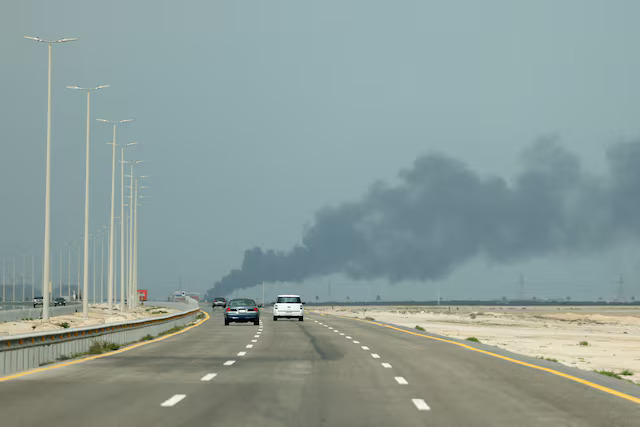
The Iran war has shattered the fragile coexistence among Gulf energy producers that long underpinned regional stability. Oil and gas markets will now carry a higher Middle East risk premium for years — if not decades.
Now in its third week, the conflict has pushed the Middle East’s vast energy infrastructure directly into the line of fire. Tehran has targeted dozens of energy installations across the region, striking at its neighbours’ – and the West’s – economic lifeline and signalling its reach far beyond the battlefield.
March 19, 2026 – Reuters
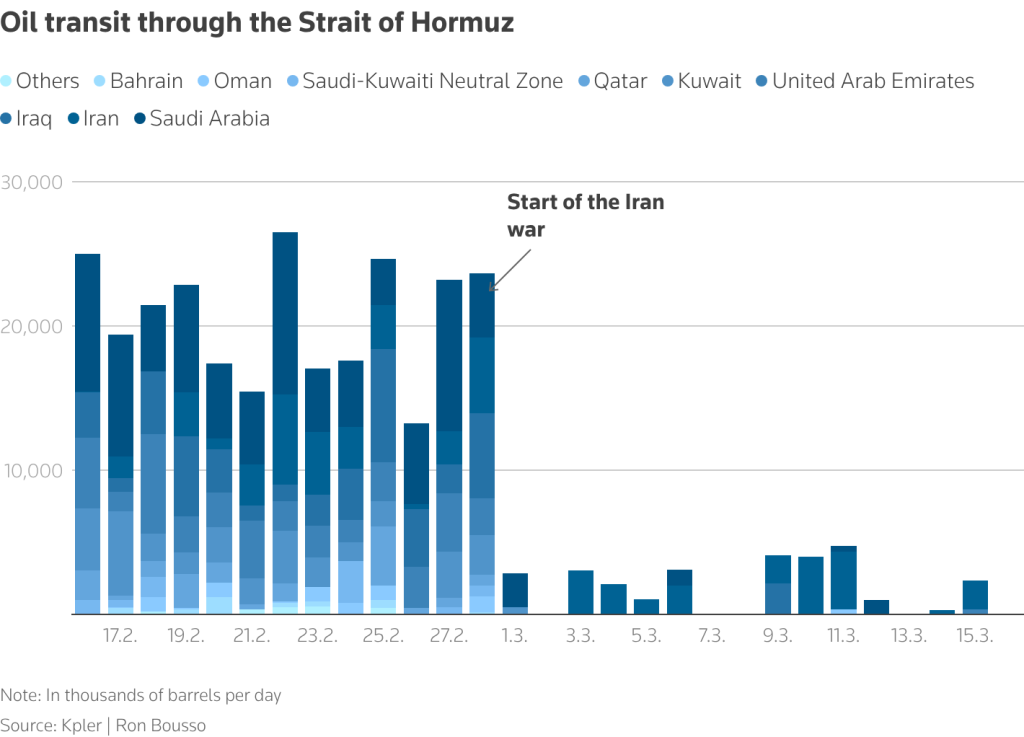
Most critically, Iran blocked the Strait of Hormuz, the region’s maritime gateway, for the first time in history. The move trapped roughly a fifth of the world’s oil and liquefied natural gas supplies, boosting crude oil above $100 a barrel – and delivering sticker shock at the pumps.
The shock has served as a stark reminder that, for all the talk of diversification and energy transition, the global economy remains acutely vulnerable to disruption in the Middle East.
It remains unclear how and when the conflict will be resolved. But barring a change of regime in Tehran that would fundamentally alter inter-regional relations, the war will leave deep and lasting scars on the world’s most important energy hub, reshaping trade flows, investment decisions and risk calculations for years to come.
THE LASTING HORMUZ EFFECT
The U.S. has so far struggled to build a naval coalition to escort vessels through the strait, underscoring the political and logistical complexity of safeguarding the chokepoint.
Iran has warned that transit will not return to pre-war conditions, signalling that even a ceasefire may not restore confidence overnight. Some form of international protection will thus likely be required long after the fighting ends.
